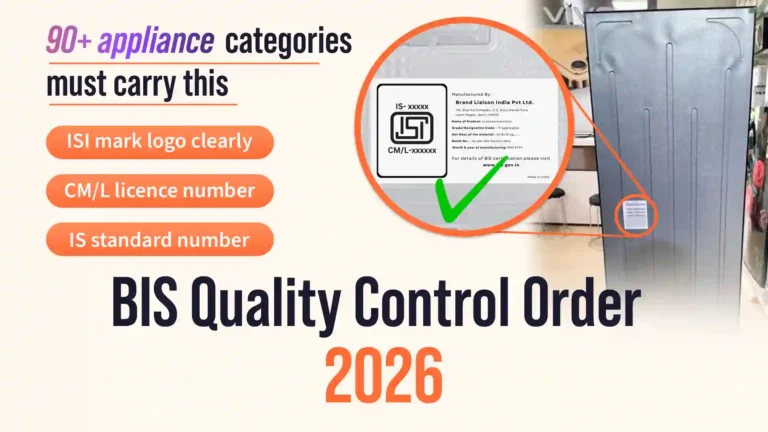
Quick Answer: The BIS Quality Control Order 2026 in India makes the ISI mark mandatory for 90+ household and commercial appliance categories from October 1, 2026. General enterprises must comply by October 1, 2026. Small enterprises have until January 1, 2027. Micro enterprises until April 1, 2027. Existing stock without certification can still be sold for 6 months after the deadline
New government safety standards for electric appliances are coming from October, and they matter for anyone planning to buy one. The Safety of Household, Commercial and Similar Electrical Appliances Quality Control Order 2026 in India changes the legal requirements for every electric appliance sold in this country, and many Indian buyers may not have heard of it yet.
The BIS Quality Control Order 2026 in India is currently written about only on B2B legal compliance websites aimed at manufacturers and importers. Not one of those pages explains what it means for the regular Indian buyer who wants to know: Should I buy my appliances now or after October? Will prices go up? Can I still buy uncertified products after the deadline? This guide answers all of those questions using only official government sources.
mandatory 90 appliances October 2026 timeline
general small micro enterprise BestBudgetPicks
consumer guide informational
Table of Contents
- What is the BIS Quality Control Order 2026 in India?
- Which Appliances Need the ISI Mark Under BIS QCO 2026?
- When Does the BIS QCO 2026 Come Into Effect?
- What is the Difference Between BIS QCO 2025 and 2026?
- Will Appliance Prices Increase Because of BIS QCO 2026?
- Who Should Act Now and Who Can Wait?
- How to Check If Your Appliance Has a Valid ISI Mark in 2026
- Frequently Asked Questions
What is the BIS Quality Control Order 2026 in India?
The BIS Quality Control Order 2026 in India is a gazette notification issued by the Government of India’s Ministry of Commerce and Industry on April 6, 2026. Its official name is the Safety of Household, Commercial and Similar Electrical Appliances (Quality Control) Order, 2026, notified as S.O. 1739(E), signed by Smt. Nidhi Kesarwani, Joint Secretary of the Department for Promotion of Industry and Internal Trade (DPIIT).
The BIS Quality Control Order 2026 in India was issued under Section 16 of the Bureau of Indian Standards (BIS) Act, 2016. In plain terms, Section 16 gives the central government the power to make BIS certification mandatory for specific product categories in the public interest, particularly for consumer safety. Before this BIS QCO 2026, BIS certification under IS 302 Part 1 was voluntary for most household appliances. Manufacturers could apply for the ISI mark to signal quality, but were not legally required to have it.
The BIS Quality Control Order 2026 in India changes that. From October 1, 2026, every appliance in the 90 covered categories must carry the ISI mark under a valid BIS licence before it can legally be manufactured, imported, or sold in India. The technical standard that all covered appliances must meet is IS 302 (Part 1): 2024, formally titled Safety of Household and Similar Electrical Appliances, General Requirements. This Indian standard is aligned with the internationally recognised IEC 60335-1: 2020, bringing India’s household appliance safety requirements in line with global benchmarks for the first time in a mandatory framework.
Which Appliances Need the ISI Mark Under BIS QCO 2026 in India?
The BIS QCO 2026 appliances list covers 90 categories of electrical products intended for household, commercial, or similar use. The voltage scope of the BIS Quality Control Order 2026 in India includes appliances operating at up to 250V for single-phase devices and up to 480V for other devices, including DC-powered and battery-operated appliances.
Here is a representative table of what is covered and what is not under the new BIS rules for appliances India 2026:
| Category | Examples | Covered by BIS QCO 2026? |
|---|---|---|
| Cooking equipment | Electric ovens, cooking ranges, microwave ovens, electric fryers, rotisseries | Yes |
| Cleaning equipment | Vacuum cleaners, water suction cleaning appliances, carpet sweepers | Yes |
| Kitchen food preparation | Food processors, juice extractors, blenders, coffee grinders, can openers | Yes |
| Water heating | Storage and instantaneous water heaters, immersion heaters | Yes |
| Space heating and cooling | Fan heaters, room heaters, portable electric fans | Yes |
| Personal care | Hair dryers, hair straighteners, curling irons, shavers, massage appliances | Yes |
| Laundry and dishwashing | Dishwashers, spin dryers, washing machines (non-fully automatic) | Yes |
| Commercial kitchen | Food warming equipment, commercial fryers, commercial heating plates | Yes |
| Battery-operated devices | Battery-powered personal care, small battery appliances under scope | Yes |
| Export-only goods | Any of the above manufactured only for export | No (Exempt) |
| Fully automatic washing machines | Covered under separate QCO | No (separate QCO) |
| Refrigerators and ACs | Covered under separate QCOs | No (separate QCO) |
A key clarification on the BIS QCO 2026 appliances scope: the order explicitly does not apply to appliances already covered under any other QCO issued under the same BIS Act, or already notified for mandatory BIS certification under any other Act. This means that refrigerators, washing machines with mandatory BIS under other orders, and ACs with their own BEE-related certification frameworks are governed by their respective orders, not this new BIS Quality Control Order 2026 in India.
When Does the BIS QCO 2026 Come Into Effect in India?
The BIS Quality Control Order 2026 in India has a staggered timeline based on enterprise size. This three-tier implementation approach gives smaller Indian manufacturers additional time to get their products tested and certified without disrupting supply chains:
| Enterprise Type | BIS QCO 2026 Deadline | Definition |
|---|---|---|
| General enterprises | October 1, 2026 | All enterprises not classified as Micro or Small under the MSME Act 2006 |
| Small enterprises | January 1, 2027 | As defined under the MSME Development Act, 2006 |
| Micro enterprises | April 1, 2027 | As defined under the MSME Development Act, 2006 |
Two specific provisions in the BIS Quality Control Order 2026 in India matter for buyers, not just manufacturers:
Existing stock provision: Manufacturers or importers who hold stock produced before their implementation date may continue selling that existing stock for up to 6 months after their deadline, provided the manufacturer is already BIS-certified or has filed an application for BIS certification with a declaration submitted to BIS. This means uncertified appliances can legally remain on shelves in some cases until April 2027 for large manufacturers, or until October 2027 for micro enterprises.
R&D exemption: Manufacturers may import up to 200 units per year of covered appliances for Research and Development purposes without BIS certification. These units cannot be sold commercially and must be disposed of as scrap. A yearly record must be maintained and submitted to the central government on request.
What is the Difference Between BIS QCO 2025 and BIS QCO 2026?
The difference between BIS QCO 2025 and 2026 is primarily about timelines, not product scope. This is the most important clarification for buyers researching the BIS Quality Control Order 2026 in India because several outdated news articles from late 2025 discuss the QCO 2025 with the March 2026 deadline as if that deadline is still current. It is not.
| Parameter | BIS QCO 2025 | BIS QCO 2026 |
|---|---|---|
| Gazette notification date | 2025 (superseded) | April 6, 2026 (S.O. 1739(E)) |
| Applicable standard | IS 302 Part 1: 2024 | IS 302 Part 1: 2024 (unchanged) |
| Appliances covered | 90 categories (same) | 90 categories (unchanged) |
| General enterprise deadline | March 19, 2026 | October 1, 2026 (extended) |
| Small enterprise deadline | Not separately stated | January 1, 2027 |
| Micro enterprise deadline | Not separately stated | April 1, 2027 |
| Status | Superseded and replaced | Currently in force |
The BIS QCO 2026 was issued because the March 19, 2026, deadline under the 2025 order was not practically achievable for most Indian manufacturers. BIS testing laboratories had a backlog. Getting certification under IS 302 Part 1 requires factory inspections, lab testing, and documentation processes that take 3 to 6 months under normal circumstances. The 2026 order effectively gave manufacturers a second window to complete compliance, while keeping the product list and technical standard identical. For consumers, the key difference between BIS QCO 2025 and 2026 is simply that the deadline that matters is now October 1, 2026, not the March 2026 date you may have read about earlier.
Will Appliance Prices Increase Because of BIS QCO 2026 in India?
The appliance price increase BIS QCO potential is real, but the honest answer is that exact price impact data does not exist yet. What does exist is precedent from previous Indian government quality and efficiency mandates that required similar compliance investments from manufacturers.
When BEE (Bureau of Energy Efficiency) revised the ISEER star rating thresholds for air conditioners in January 2026, the resulting compliance costs contributed to AC price increases of 5 to 7 percent across major brands in the first quarter of 2026. Refrigerator prices saw 3 to 5 percent increases when their BEE star rating criteria were similarly revised. In both cases, manufacturers absorbed a portion of the compliance cost and passed the remainder to consumers through pricing adjustments.
BIS certification under IS 302 Part 1 involves laboratory testing fees, BIS inspection fees, licence fees, and factory modifications to meet safety standards. For large manufacturers with established quality systems, these costs are relatively modest as a proportion of product cost. For smaller manufacturers and importers who source from uncertified factories, the BIS QCO 2026 compliance cost is higher and more likely to be passed to consumers.
The categories most likely to see an appliance price increase from BIS QCO 2026 in India are currently dominated by uncertified or informally certified products: budget hair dryers, inexpensive electric kettles, low-cost multi-cookers, and similar small appliances, where a significant portion of the market is currently sold without ISI marks. Products from established brands like Philips, Prestige, Bajaj, and Havells that have existing quality systems are less likely to see significant price changes, as many were already voluntarily meeting similar standards.
The realistic estimate, based on BEE precedent and the cost structure of IS 302 Part 1 certification, buyers should anticipate a 5 to 10 percent price increase on specific small appliance categories that are currently sold without ISI certification. On products already from certified manufacturers, the price impact may be negligible. No official price impact assessment has been published by DPIIT or BIS as of June 2026.
Who Should Act Now Because of BIS QCO 2026 and Who Can Wait?
You should act before October 2026 if:
- You are planning to buy a new appliance in a covered category and are price-sensitive. If prices do increase post-October 2026 due to compliance costs, buying before October may mean buying at the current price. The risk: non-certified products purchased today will continue to function fine but may be harder to get repaired as uncertified models are phased out.
- You are an importer or a small brand stocking inventory. Your compliance deadline may be October 2026, January 2027, or April 2027, depending on your enterprise classification. The BIS certification process takes 3 to 6 months, so starting now is the correct action regardless of your deadline.
- You run a retail shop selling uncertified appliances. Understanding the sell-through timeline for your current stock is important, as the 6-month existing stock provision requires a BIS certification application or existing certification to qualify.
The BIS QCO 2026 does NOT affect you if:
- You already own the covered appliance. The BIS Quality Control Order 2026 in India has no retroactive requirement. If your vacuum cleaner or hair dryer was bought without an ISI mark last year, you face no legal obligation and no requirement to replace it. The order applies to manufacture, import, and sale, not to existing ownership.
- You are buying from established Indian brands with existing BIS certification. Brands like Prestige, Bajaj, Philips India, Havells, and Kent that already have IS 302-compliant products are largely unaffected in terms of product availability. Their products will continue to be available post-October 2026 because they are already certified or are on track to certify.
- Your appliance falls under a different QCO. Refrigerators, fully automatic washing machines, and air conditioners have their own mandatory certification frameworks. The BIS Quality Control Order 2026 in India does not add new requirements for these categories.
How to Check If Your Appliance Has a Valid ISI Mark in India 2026
The ISI mark on an Indian appliance is not simply a printed logo. A valid ISI mark under the BIS QCO 2026 appliances framework includes a specific licence number in the format CM/L-XXXXXXXX, where CM/L stands for Certification Mark and Licence, followed by the unique licence number issued to that manufacturer. This number is what distinguishes a genuine BIS certification from a counterfeit ISI mark.
Where to find the ISI mark on your appliance: On most household electrical appliances, the ISI mark is printed or embossed on a label attached to the appliance body, base, or rear panel. On packaged goods, it appears on the product packaging. The mark should include the stylised IS logo, the relevant Indian Standard number (for appliances covered under BIS QCO 2026, this will be IS 302 Part 1: 2024), and the CM/L licence number.
How to verify a CM/L licence number: The Bureau of Indian Standards provides an online verification portal at BIS Care or the BIS portal at bis.gov.in. Enter the CM/L number from the product label. The portal confirms whether the licence is active, the manufacturer’s name and address, and the product category it covers. This verification takes approximately 2 minutes and requires only the CM/L number from the product.
What does the ISI mark not guarantee: The ISI mark confirms that the manufacturer has a BIS licence and met the standard at the time of certification. It does not guarantee that every unit of that product is individually tested. BIS conducts periodic surveillance and market inspection, but consumer vigilance in verifying the CM/L number before purchase remains the most reliable first check. A missing CM/L number on a product that claims to carry the ISI mark is the clearest indicator of a counterfeit certification.
A Motion Designer’s View on Why This BIS QCO 2026 Actually Matters for Indian Buyers
Safety problems in budget appliances are often not in the visible parts of the product. They are in the internal wiring, the plastic used near heating elements, and the earthing connections. These are the components that IS 302 Part 1: 2024 specifically addresses, and they are invisible when a product is being looked at in a shop or in a product video.
The BIS Quality Control Order 2026 in India is not a protectionist measure against imported appliances, though it will have that effect on non-compliant imports. It is primarily a consumer safety measure. The IS 302 Part 1: 2024 standard, aligned with IEC 60335-1: 2020, sets specific requirements for insulation quality, earthing connections, protection against overheating, and resistance to moisture. Each of these directly addresses the three most common causes of household electrical accidents in India: electric shock from faulty earthing, fire from overheating components, and short circuits from moisture exposure in Indian kitchen environments.
If the appliance price increase BIS QCO results in a 5 to 10 percent higher price on a hair dryer or electric kettle, the consumer gets a product that has been tested to a standard that reduces the probability of it starting a fire or causing a shock. For most categories covered by the new BIS rules for appliances in India 2026, that is a reasonable trade.
Frequently Asked Questions
What is the BIS Quality Control Order 2026 in India?
The BIS Quality Control Order 2026 in India is a gazette notification (S.O. 1739(E)) issued by the Ministry of Commerce and Industry on April 6, 2026, under Section 16 of the BIS Act, 2016. It makes BIS certification under IS 302 Part 1: 2024 mandatory for 90+ categories of household and commercial electrical appliances sold in India. General manufacturers must comply by October 1, 2026.
Which appliances need the ISI mark in 2026 under the BIS QCO?
The ISI mark mandatory appliances 2026 list includes 90 categories: vacuum cleaners, electric ovens, cooking ranges, food processors, juice extractors, coffee makers, hair dryers, shavers, massage appliances, dishwashers, fan heaters, room heaters, water heaters, and commercial kitchen equipment. The scope covers appliances up to 250V single-phase and 480V for others, including battery-operated products. Export-only goods and appliances under separate QCOs are exempt.
When does BIS QCO 2026 come into effect in India?
The BIS QCO 2026 comes into effect in three phases: General enterprises from October 1, 2026, small enterprises from January 1, 2027, and micro enterprises from April 1, 2027. Manufacturers holding pre-deadline stock may sell it for up to 6 months after their applicable deadline, provided they are already BIS certified or have filed a certification application with the required BIS declaration.
Will appliance prices increase because of BIS QCO 2026?
A 5 to 10 percent price increase is possible on appliance categories currently dominated by uncertified products, based on precedent from BEE star rating compliance costs that pushed AC prices up 5 to 7 percent and refrigerator prices up 3 to 5 percent. Appliances from established certified brands like Prestige, Bajaj, Philips, and Havells are less likely to see significant price changes. No official price impact data from DPIIT or BIS exists as of June 2026.
What happens if an appliance has no BIS certification after October 2026?
After October 1, 2026, manufacturing, importing, or selling a covered appliance without BIS certification in India is a legal violation under the BIS Act, 2016, attracting penalties under the Act. Existing pre-deadline stock without certification can be sold for up to 6 months after the deadline if the manufacturer is certified or has filed for certification. After that window, uncertified products in the covered categories cannot legally be sold in India.
Is BIS QCO 2026 applicable to imported appliances in India?
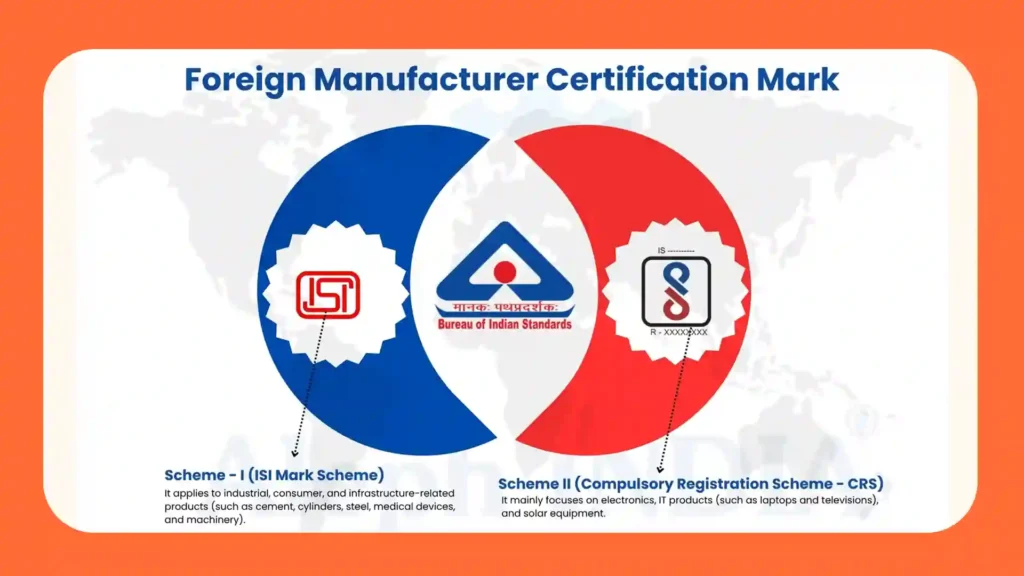
Yes, the BIS Quality Control Order 2026 in India applies to both domestically manufactured and imported appliances in the 90 covered categories. Foreign manufacturers must obtain BIS certification through the Foreign Manufacturers Certification Scheme (FMCS), which requires appointing an Authorised Indian Representative, an overseas factory inspection, and laboratory testing against IS 302 Part 1: 2024. Export-only goods are exempt regardless of origin.
What is the difference between BIS QCO 2025 and 2026?
The difference between BIS QCO 2025 and 2026 is the compliance timeline, not the product list or standard. Both orders cover the same 90 appliance categories and reference the same IS 302 Part 1: 2024 standard. The QCO 2025 set a general deadline of March 19, 2026, which was not practically achievable for most manufacturers. The BIS QCO 2026 superseded the 2025 order entirely and extended the general deadline to October 1, 2026, with staggered timelines for small and micro enterprises.
You Might Also Like
- BEE Star Rating India 2026: Your 5-Star AC Might Now Be 4-Star
- Best Double Door Refrigerator in India 2026
- Best Air Conditioner in India 2026
- Best Kitchen Gadgets Under Rs 1000 in India 2026
Sources
- Bureau of Indian Standards: Upcoming QCOs Notified and Due for Implementation
- Gazette of India: S.O. 1739(E) dated 6 April 2026, Ministry of Commerce and Industry (DPIIT)
- Zee Business: New Safety Norms for Electrical Appliances, BIS QCO 2026 Details (April 6, 2026)
Written by Nipul Patil: Consumer products researcher and motion designer based in Mumbai. This guide explains the BIS Quality Control Order 2026 in India for regular buyers, using official sources. No affiliate links. No sponsored content. Only official sources cited. About BestBudgetPicks